Confessions_Anthology_cover

Confessions was recently judged in the 19th Annual Writer’s Digest Self-Published Book Awards.  The judge commented, “This is a terrific idea for an anthology.  The blurring of the line between fact and fiction, a theme perfectly captured in the cover, is one that should be greatly appealing to writing programs and many other readers.  Who doesn’t wonder, when reading a book, how much of it is ‘true?’  I especially liked the way you wove the authors’ insights into the anthology.  The answer key at the end was a fun twist.  Certain stories jumped out immediately.  For sheer horror, Julia Park Tracey’s story is up there, as is the biographical blurb she wrote.  ‘Miracle’ was beautifully written.”

none

Herta & Emily 2011

Dear friends,

Emily and I wish all of you a happy holiday and healthy 2012!

All the best,

Herta B. Feely & Emily Jones

none

How would you like a chance to win a copy of Confessions: Fact or Fiction? by simply writing a very short story? Here’s the deal:

All you have to do is submit a short short story (1000 characters or less) that’s either fact or fiction on my Facebook page.  Facebook posts have a limit of 1000 characters (including spaces) which comes out to be around 170-200 words, depending on the words you use.  This is a great challenge — make it a fun one!  It’s good practice for a writer to pare down all those words and say only what’s important.  Hint: do a character count on your document before submitting.

Just as Confessions explores the fragile boundary between memoir and fiction, I thought this contest would be a fun way to share anecdotes and stories and have others guess whether they are true or not.

Click here

http://www.facebook.com/event.php?eid=148189508614839

to be redirected to the contest.  Vote for your favorite story by “liking” it on Facebook, and feel free to comment on whether you think a story is a memoir or fiction!  The story with the most votes will win.

Winners will receive a copy of Confessions: Fact or Fiction? and will have their story read at our book party at One More Page Books in Arlington, VA on December 15!

If you are a member of a book club or have family or friends that might be interested, please feel free to invite them to participate.

The contest will end on December 6th and winners will be announced the next day.

Good luck and may the best story win!

The Dec. 15th Confessions: Fact or Fiction? reading located:

2200 N. Westmoreland St.  #101

Arlington, VA 22213

www.onemorepagebooks.com

www.confessionsanthology.com

one

Hey all, we have some very exciting news: Confessions: Fact or Fiction was recently named one of two finalists in the anthology category of the USA “Best Books 2011″ Awards!

Check out the information below:

USA BOOK NEWS ANNOUNCES
WINNERS AND FINALISTS OF
THE USA “BEST BOOKS 2011” AWARDS

Mainstream & Independent Titles Score Top Honors in the
8th Annual USA “Best Books” Awards

Simon & Schuster, St. Martin’s Press, Random House, Penguin, Harper Collins, Houghton Mifflin Harcourt, McGraw-Hill, John Wiley & Sons and hundreds of Independent Houses contribute to this year’s Outstanding Competition!

Read the 2011 National Press Release

Fiction: Anthologies

Winner
Pellucid Lunacy edited by Michael Bailey
Written Backwards

Finalist
Caribbean Bones by Richard Corwin
Bujew Press

Finalist
Confessions: Fact or Fiction? edited by Herta B. Feely & Marian O’Shea Wernicke
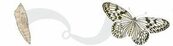
Chrysalis EditorialConfessions Cover

Order a copy of Confessions: Fact or Fiction at https://www.createspace.com/3687615 or amazon.com.  Also available as an ebook with Kindle and Nook.

none

We are excited to announce that, in addition to being available on amazon.com, Confessions: Fact or Fiction is now available at a reduced rate through CreateSpace!  Click here to purchase a copy today. 

The anthology is also available as an ebook through Kindle, and can be purchased by clicking here.

none

Fact and Fiction…

“I believe that writing this story helped me see my father for the man he was, and helped me recognize and admit the love I truly felt for him.” – Mark Farrington, on writing “My Father’s Court”

Farrington

We have a special treat for you this week from one of the Confessions: Fact or Fiction? authors. We invite you to read about the inspiration behind Mark Farrington’s “My Father’s Court”. In the following piece, Mark offers his unique insight into how his writing both influenced and was influenced by his relationship with his father. This piece is followed by an excerpt from his story.

My father passed away last fall, a few weeks before confessions: fact or fiction? came out. photo 1He was 88 years old and had been sick for several months, so his death was not surprising. What did surprise me was the intensity of the sadness and sense of loss I felt. My father and I had always been friendly toward each other, but we had never been close.

He was a working man. He served in the Army in World War II, stationed in China, Burma, and India. After the war he worked in a General Electric plant, as janitor of a small high school, and as a “size man” at a paper mill. He finished high school but he didn’t like to read, and I don’t think I ever saw him reading anything other than the newspaper. I was a writer who loved books and art and music and theater. Growing up I played basketball and football, but even here we found no common ground, as he did not care for sports.

I write fiction primarily, and “My Father’s Court” is a fictional story. It’s based on a true situation, in that my father when he was a janitor did bring me to school with him, when I was eight or nine or ten, and he was working in the evenings. Sometimes he brought me to the empty school and I shot baskets in the echo-filled gym while he swept and mopped floors. On other occasions, he brought me to the school to watch a high school basketball game. Although I recall no specific game that unfolded like the one in the story, nor do I remember any particular players like the ones I wrote about, the details of that evening are all based on truth, even the white “S” in the blue circle in the middle of the floor, and the way the bleachers folded and unfolded like an accordion when my father stuck a key in a slot in the wall.

What’s “truest” in the story is the character of the father. I did not intentionally change anything about him, other than his name. (Changing the name was no small thing: my father told me once that he had read one of my published stories, one that was about a husband and wife having troubles, and one for which I “borrowed” events and details from my own parents and their lives. He told me that some of the things in my story seemed familiar, but, he said, “I knew the guy wasn’t me because his name was Al and my name is Ed.”)

Much of my fiction has its roots in autobiography, but most of the things I’d written before “My Father’s Court” focused on relationships between a man and a woman – lovers, or husband and wife, or the relationship between a mother and son.  With this last group of stories, the father was always absent – killed in a tragic car accident, or just out of the house working all the time.  Sitting down to write “My Father’s Court” marked the first time I specifically set out to write a story about a father-son relationship; the first time I set out to write about my father.  READ ALL OF MARK’S PIECE BY LINKING HERE…

AN EXCERPT FROM “MY FATHER’S COURT”

There was a time the boy stood beside his father. Eight years old, ankle-deep in fresh-fallen snow, on the wide concrete step outside the back door of the high school gymnasium. A few straggling snowflakes flitter from an oatmeal sky. The boy’s father takes off one glove, pins it in his armpit, and searches the brass key ring attached to his belt, isolating each key and holding it up to the diffused light of the street lamp behind them, because the light above the back door isn’t working. “Have to fix that, too,” the boy’s father says about the bulb. “I’ll catch hell from the coach if they have to tromp through here in the dark.”

A laugh pops out of him in a cloud of cold air. The same laugh, nervous and childlike, that irritates the boy’s mother so. You won’t think it’s so funny, he hears her say, when you wake up some morning and find me gone.

Recently, the boy has realized he and his father share the same curly dark hair and green eyes. They both like Abbott and Costello, who the boy’s mother calls, Idiots. A pair of clowns.

I don’t think this is it,” the boy’s father says about one key, then forces it anyway. “I already tried this one, I think,” he says about another. But this one turns, making the lock click free. “Eureka, Watson!” he cries. When he jerks open the door, the warm air pouring out stings the boy’s tight cold cheeks. Even his eyebrows feel stiff.

“At least the furnace is working tonight,” his father says. The boy follows him upstairs, imagining the horror of an ice-cold gym. “Here we are.” The door closes, trapping them in the immense dark.

Lights pop on, a row of them, then another, and the formless dark gives way to a high ceiling and walls, and a floor of pure magic. To the boy it’s as gloriously breathtaking as a baseball diamond; more so, because it is a floor and it’s been painted – black lines around the edge and more in front of each basket, and in the center a big blue circle with a white “S” in the middle. Superman, the boy thinks, although he knows it stands for Stanton, the high school’s name.

“We don’t want to cross that line.” His father points to the black border, and the boy steps back as if at the edge of a lake during spring thaw. “Not with our boots on, we don’t.” He laughs. “It’s the law.”

He unlocks a door in the corner that opens to a closet large as a garage. Inside are rolled-up mats, a folded trampoline. He drops the paper bag he’s been carrying onto a card table in front, next to a rack of basketballs, and sits on a folding chair to yank off his boots. The boy tugs his off, too, and when his father picks them up they leave a little puddle of melted snow on the concrete floor.

“You have to wear sneakers to be allowed on the court,” his father explains as they put theirs on. Their boots are lined up on top of the newspaper, the large boots and the small boots matching the way the boy and his father would look if they, too, stood side by side…


Read more excerpts and get ordering information by checking out our website.

none

We have finished putting together the new video book trailer for Confessions: Fact or Fiction.  We are really excited about the video and invite you to check it out here:

Confessions Anthology cover


We hope you like it – let us know what you think!

none

All about setting

In Sarah Domet’s fifth day assignment on setting there are four parts, which I’ve worked on over the course of a week, life having finagled its way into obstructing a more rigorous schedule. Okay, that’s another excuse, but if only I could share with you all the barriers and demands, not the least of which has been work, and other stupid things I fill up my days with, like inviting a writers’ group over for the monthly meeting. (Yes, it was high time that I hosted the meeting, but between getting ready for it and then having it and then cleaning up, it took up 2/3 of my working day!!! And then I had a haircut!)

This assignment had to do with setting. 4 parts!

1) Choose 3 characters and describe where they live;

2) describe a favorite place of each of these characters;

3) write a scene that reflects the mood of the character; and

4) research time period and then write a scene, (which I provide you an example of here).

Lots of good stuff, but again the four assignments took several days. One thing I notice, however, is that each assignment spawns new ideas (plot and other) for the story, continues to help me develop the characters, and just generally gets me into the mood to write. (Thank you, Sarah!)

Assignment Background: main character Phoebe is heading to school, off to her first day of high school (ninth grade) and has a flashback of the previous school year (this was already written):

She could still hear the punishing insults after Bethany had grabbed her thermal lunch bag and dumped its contents onto the cafeteria table before everyone. Two sandwiches slathered with peanut butter and jelly, a container of yogurt, a banana, an apple, a Snickers bar and two Oreos. The girls around her pointed and laughed. “Gee, Phoebe, eat much?!” And then they’d captured the attention of a few boys wandering by with their trays, including Jake, Phoebe’s crush, and they’d joined in the hazing.

Here’s the scene written for the assignment:

Phoebe had wanted to die. Instead, she turned bright red, even brighter than her coral-colored hair, and tears sprang to her eyes. Then she rushed from the table and headed to the girls’ smelly bathroom. In the last stall, the one along the back wall, which someone had defiled with the words “Susie slut,” she sank to a crouch and sobbed. And that’s when it happened. Without thinking, she’d withdrawn a paper clip from her pocket, and began fiddling with it, untwisting it until one end jutted out like a tiny dagger. She’d taken the instrument and run the sharp metal across the inside of her thigh, pushing it hard until droplets of blood surfaced.

What had surprised her most was the relief that flooded through her body. The ragged cut absorbing her pain. When she felt in control of her emotions, she tore off some toilet paper, wiped her eyes and dabbed at the blood, watching the bright red color spread onto the tissue.

I researched “cutting” as a form of self-injury. I’m trying to establish mood in this scene as well, though I’m not entirely sure I’ve accomplished that. Well, it’s a start.

Let me hear your thoughts, readers. Whaddayathink?

p.s. I’m on Day 10, but got behind on posting my blogs…so hopefully I’ll post more over the next couple of days. Stay tuned

none

Keeping up with our promise to feature a new author from the recently published anthology Confessions: Fact or Fiction? we have posted another author feature this week.  We hope you enjoy reading about this talented writer, and again we challenge you to guess whether her piece (excerpt posted below) is fiction or fact…and we’d love to hear why!

This week’s featured author is …..

Michelle Brafman

_MG_0134_crop

Michelle Brafman’s fiction has received numerous honors, including a Special Mention in the 2010 Pushcart Prize Anthology, a storySouth Million Writer’s Award listing as one of the best online stories published in 2009, and nominations for a 2011 Pushcart Prize and Best New American Voices 2009. A past winner of the F. Scott Fitzgerald Short Story Contest, her stories have appeared in the minnesota review, Lilith Magazine, Gargoyle, Blackbird Literary Journal, Fifth Wednesday Journal, and other publications. She teaches creative writing at George Washington University and lives in Glen Echo, Maryland with her husband and two children.

Excerpt from:

JOHN GREENWOOD

YOU TOLD ME YOU HAD A DREAM about John Greenwood when I called you last month out of the blue to wish you a happy thirtieth birthday. You told me about your big IBM management job and your condo across the highway from Del Mar Beach and your boyfriend. Without words, you told me to archive our college friendship as I would my old prom dress or Barbies.

You hesitated when I told you that Teddy and I were coming  from Chicago to celebrate our fifth anniversary, but I called you back the next day anyway. “Looks like it will be just me,” I announced to your answering machine. “Teddy’s tied up at work.” Truth? Teddy gave me the shoe. Teddy, who massaged my back with olive oil and bought me dark chocolate he couldn’t afford when he was a pudgy med student with thinning, mud-colored hair, is sleeping with a lab tech. Fucking cliché. He’ll have cleared out his things by the time I return from visiting you.

none

Keeping up with our promise to feature a new author from the recently published anthology Confessions: Fact or Fiction? we have posted another author feature this week.  We hope you enjoy reading about this talented writer, and again we challenge you to guess whether her piece (excerpt posted below) is fiction or fact…and we’d love to hear why!


This week’s featured author is ….. 


               Amy Fries                   amy_fries_new_bio_photo          


Amy Fries is a writer and editor working in Northern Virginia. She is a blogger for PsychologyToday.com and the author of Daydreams at Work (Capital Books, 2009). Amy received an M.A. in Writing from Johns Hopkins University.


 Losing My Religion


At some point, I quit believing in the religion of my birth. In religion, period. A break that left my parents feeling scorned and rejected. “What did we do wrong?” my mother still asks. “It’s-not-you-it’s-me,” I defend myself with that old but true standby. After all, faith cannot be faked.

Time and again, when I try to pinpoint the beginnings of my long struggle between doubt and faith, I find myself back in Sister Anna Marie’s piano room in the convent of the Blessed Sacrament, the room with the green vinyl couch, the brown-and-white checkered asbestos-tile floor, the walls barren, except of course, for the omnipresent 3-D crucifix. No sleek modern symbols here. This was the body of Christ, nailed in twisted pain onto the cross. The room reeked with the stench of a disinfectant that novice nuns regularly swabbed all over the convent. The decor, I’m sure, was supposed to inspire quiet reflection, but for me, it inspired terror, terror of falling short of the judgment of Sister Anna Marie.

But the most outstanding piece in the room was the piano itself. Plastic wrap covered the entire upright except for the keys. That way Sister Anna Marie could protect it from the grubby fingerprints of her halfhearted charges.

I had taken lessons from Sister Anna Marie, from 1968 through 1972, third grade through the eighth. She looked ancient to me back then, though she was probably only in her seventies. She was tall and lean. Bits of gray hair poked out along the edges of her wimple. Vatican II, the document freeing Catholics from the mysteries of Latin and black cloth among others, had occurred in the mid-sixties, and nuns were free to doff the head-to-toe garb. But not Sister Anna Marie. She was too old, I suppose, to change her habits. So she remained with the starched white wimple pinched about her face.

Sister Anna Marie was a dictatorial terror, hovering over the metronome that clicked, clicked, clicked away the nanoseconds of my half-hour lessons. If I failed to tinkle the ivories to the beat, her hands would clap in my face, her foot would stomp on the linoleum until my heartbeat, the metronome, the clapping, and the chords melted into one monstrous internal melody.


none